The Lost Shtetl Jewish Museum
The monumental museum composed of abstract ‘houses’ representing the destroyed shtetl, commemorates the lost lives and culture of Šeduva’s former Jewish community.

The ethereal architecture of the museum located in Šeduva, Lithuania, is an interpretation of the Jewish village, a shtetl in Yiddish, of Šeduva that was destroyed in the Holocaust.
The white design refers to the lost village and settles into the landscape with a subtly monumental architectural expression. The steep hipped roofs are finished in aluminium shingles, containing a varied sequence of interior spaces.
The museum building houses a lobby and café, library, offices and an auditorium, a small pedagogical space, as well as exhibition facilities, which occupy the largest part of the floor plan.
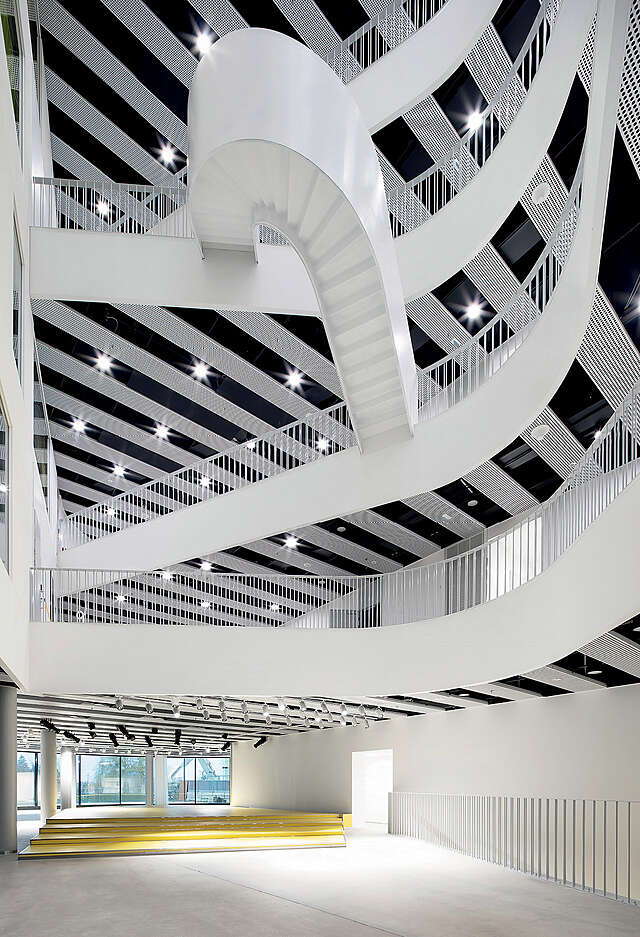
The material choices alternate between metal, stone, wood and glass in a coherent composition. The museum tour concludes in a soaring canyon of a space that narrows upwards, leading the visitor towards the daylight and a tall window that opens out towards the former Jewish cemetery of Šeduva. The interior architecture with its varied sequence of spaces, is integrated with the message and narrative of the museum.
The location amidst the rolling fields of rural Lithuania reflects the theme that is deeply rooted in the place and its local history. The historical narrative focuses on the life of the Jewish community, and the Holocaust is depicted, first and foremost, as experienced by the local community.
Source: Finlandia Prize for Architecture 2026 pre-selection jury
Gallery


Location
14, Žvejų g., Šeduva, Šeduvos miesto seniūnija, Radviliškio rajono savivaldybė, Šiauliai County, 82228, Lithuania
Get directions