Kumu, Art Museum of Estonia
The art museum showcases Estonian and international art in a building that responds to its sloped site with curving interior spaces and a patinated copper, stone, and glass exterior.
The international competition for the new art museum in Tallinn, organised in 1994, attracted a total of 233 entries. All the prizes went to Finnish architects, who had already had the chance of studying a similar, highly demanding task in their own country, namely the competition for the Museum of Contemporary Art in Helsinki.
The winner was a then yet unknown architect Pekka Vapaavuori. The design and construction process was long and included plenty of political discussion and media debate. The museum was opened in 2006.
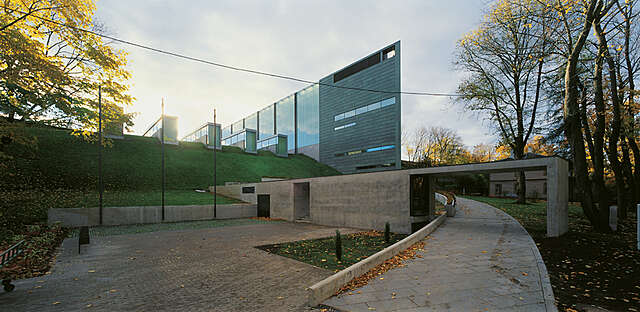
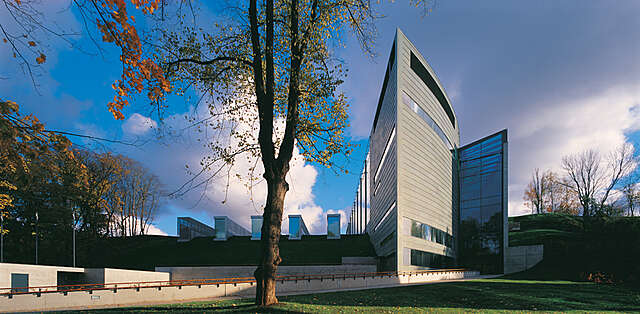
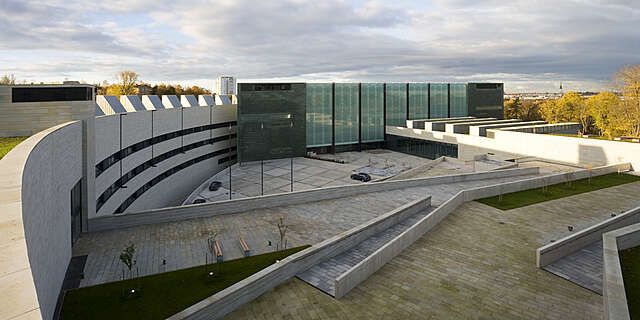
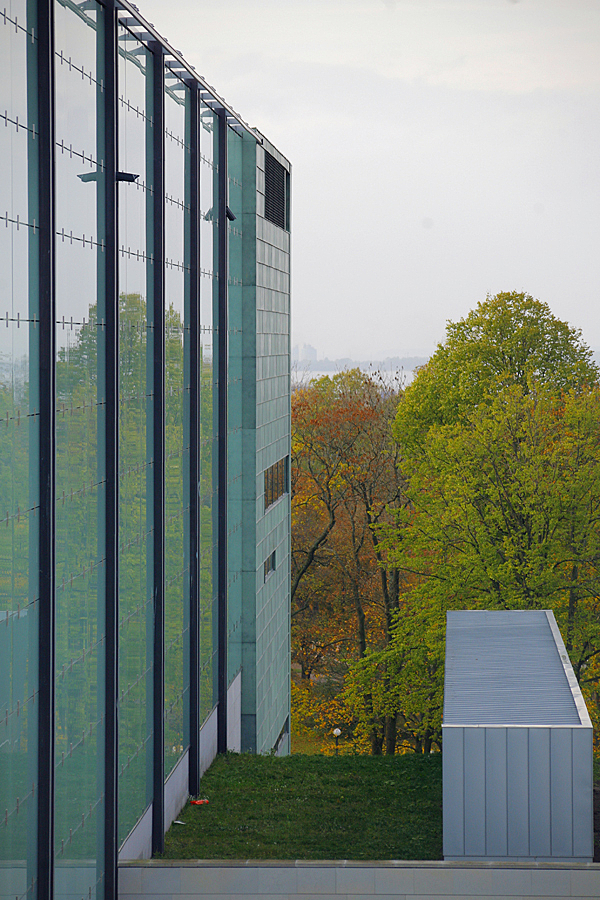
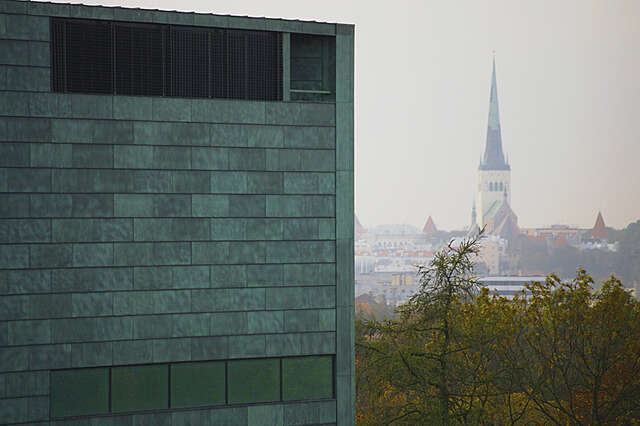
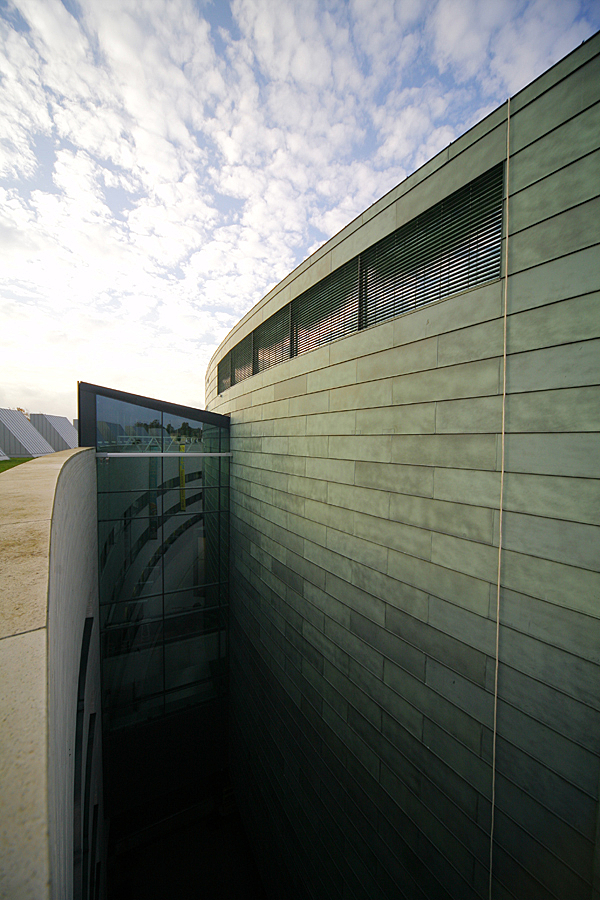
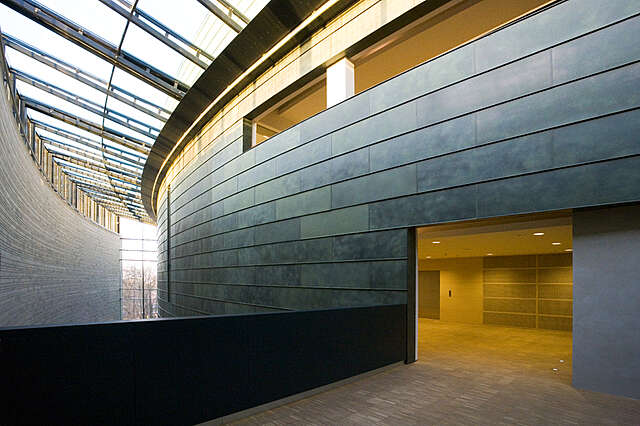
Vapaavuori’s design takes advantage of the site on the Lasnamäe slope. The museum can be entered from both the historical Kadriorg park and from the top of the slope. Patinated copper, natural stone and glass are the prevailing exterior materials.
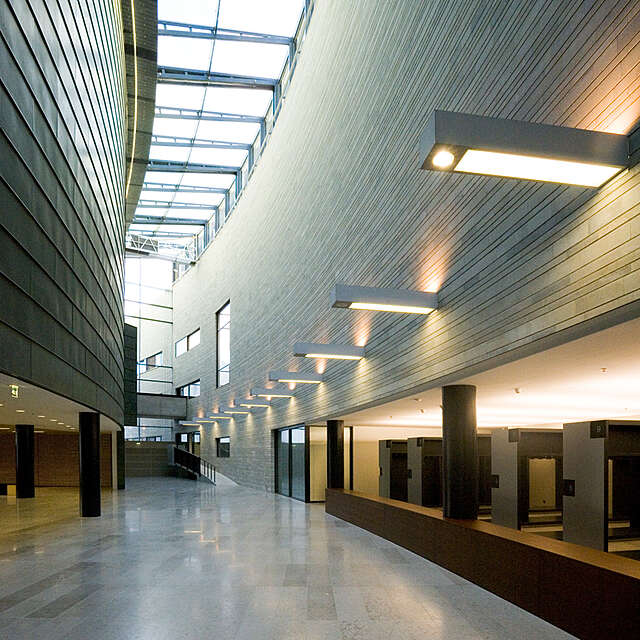
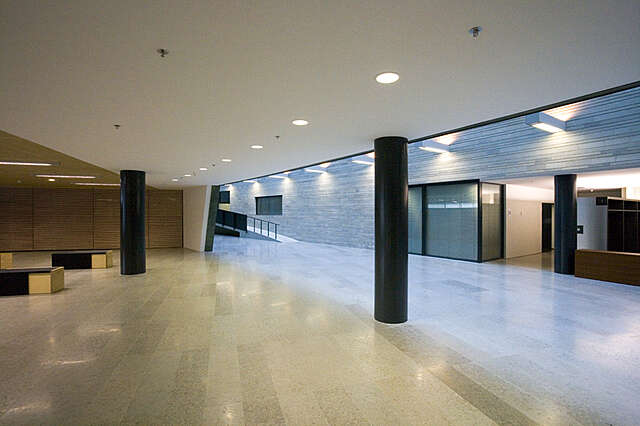
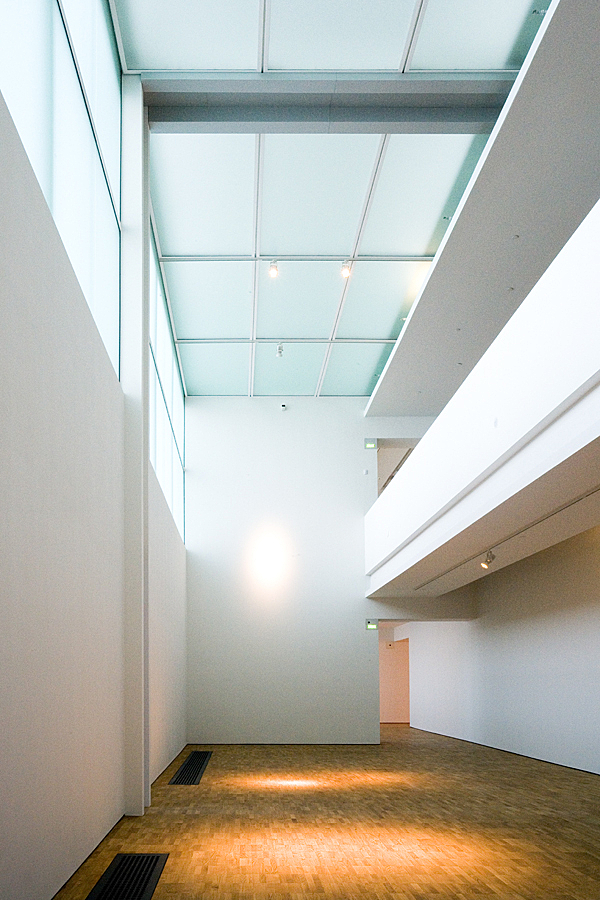
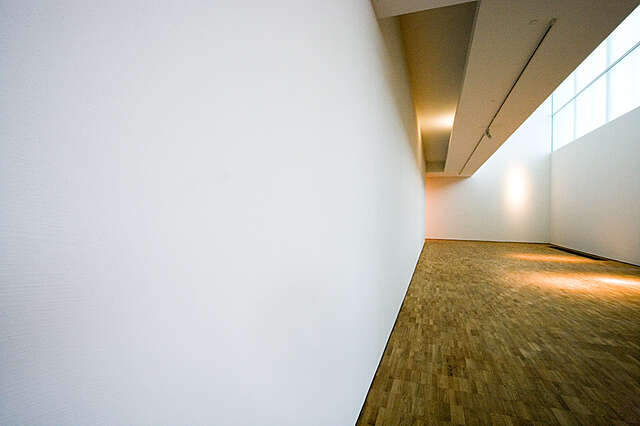
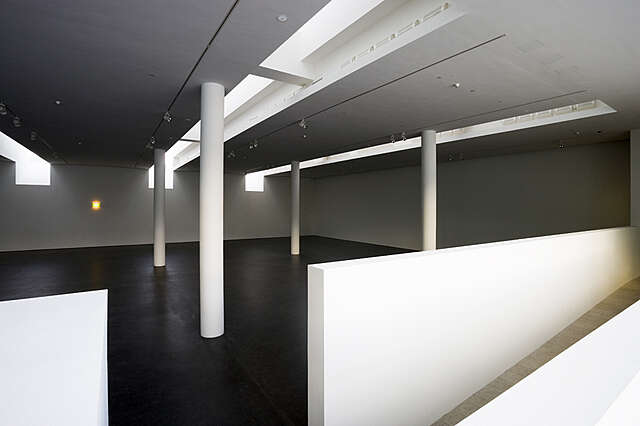
There are exhibitions halls for collections of Estonian art starting from early 18th century as well as spaces for displaying contemporary Estonian and international art. In addition, the building comprises a spatially generous, curving foyer and a shop, library, auditorium, café and restaurant. The staff facilities and the conservation department are located in the semi-circular part of the building that surrounds the sizable terraced courtyard.
In 2008, the museum received The European Museum of the Year Award. The process of this Estonian-Finnish joint venture has resulted in an actively used building with enduring architectonic qualities.
Text: Tarja Nurmi
Gallery
Location
A. Weizenbergi 34 / Valge 1, Tallinn, Estonia
Get directions