Pavilion of Finland
Originally designed as a temporary exhibition space for the 1956 Biennale Arte, the wooden pavilion has been an integral part of the Giardini Pavilion Park in Venice ever since.

In 1955, the Aaltos were commissioned to design a small pavilion for Finnish exhibits at the biennial international art exhibitions in Giardini, Venice.
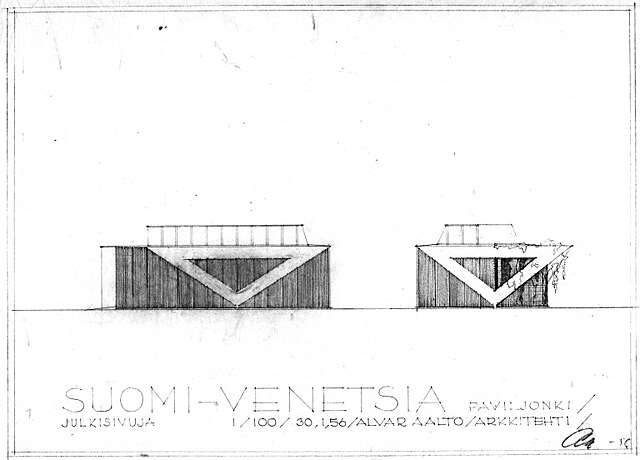
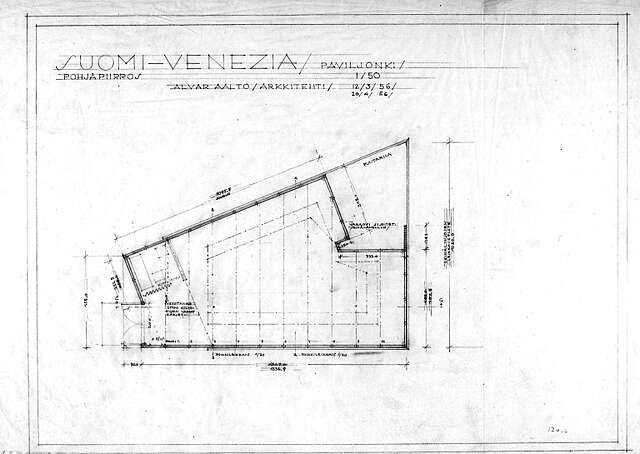
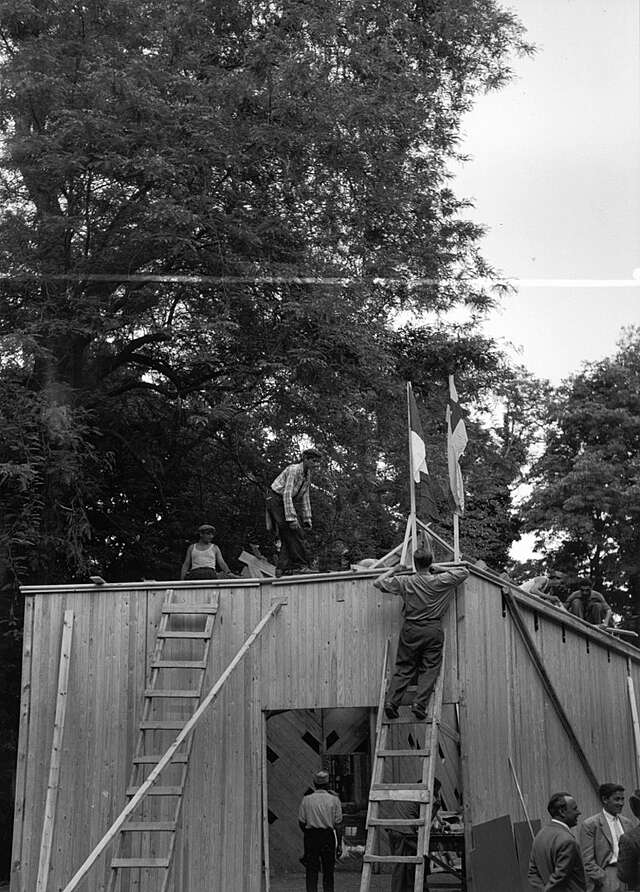
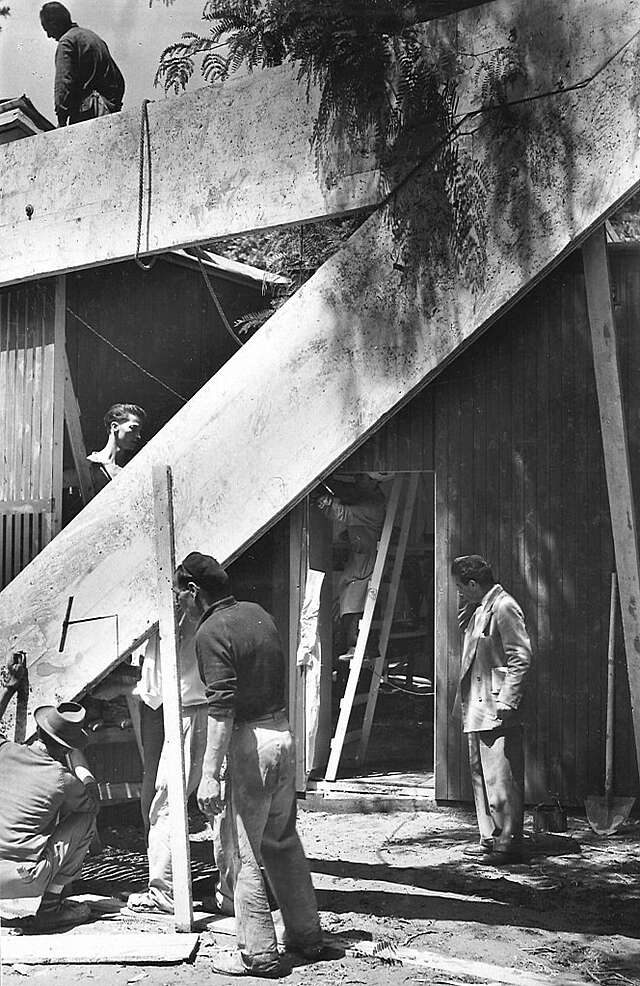
Alvar and Elissa Aalto designed a wedge-shaped structure to be assembled of light, dismountable wall and roof units made in Finland and transported to Italy. The idea was that it could be dismantled and stored between exhibitions or re-erected on another site. Owing to errors in production, however, it has remained immovably in place since the summer of 1956.
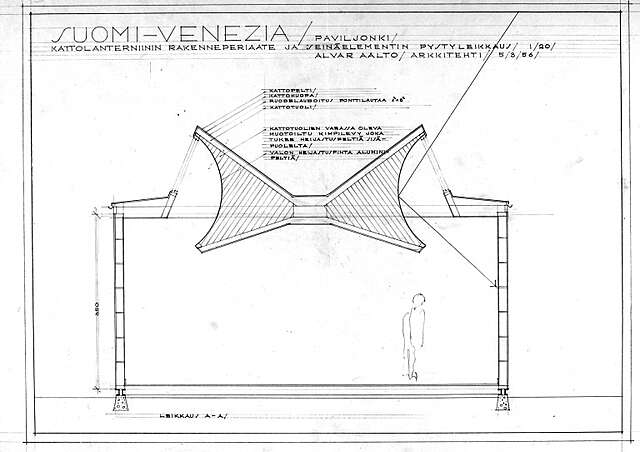
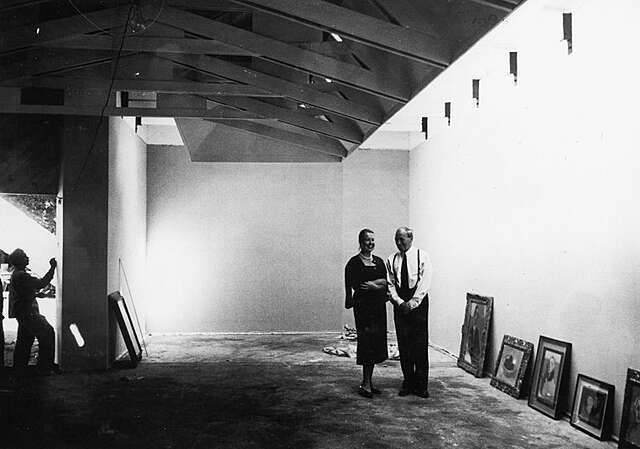
Restored in the 1990s and again, after a large tree fell on it, in 2012, the pavilion consists of an exhibition room of some 100 square metres and is lit by a system of longitudinal ‘lock’ skylights, with which the Aaltos experimented in the design of the pavilion for the first time.
The dark blue wooden wall units are supported from outside by large wooden triangles painted white for contrast. From 1962 through 2007, the pavilion was rented to other countries: Italy, Argentina, Portugal, and Iceland. Since 2007, with the support from the Finnish Ministry of Culture, similarly as in the first years 1956–1960 of the pavilion, it has been used biennaly for Finnish art and architecture exhibitions.
In 2012 the pavilion was damaged during a storm but was restored afterwards.
In the Biennale Architettura 2025, the Pavilion of Finland presented an exhibition that recounted the story of the pavilion, from its design through the restorations until today.
Gallery



Location
Castello, 30100 Venice, Metropolitan City of Venice, Italy, Venice, Italy
Get directions