Hanasaari Cultural Centre
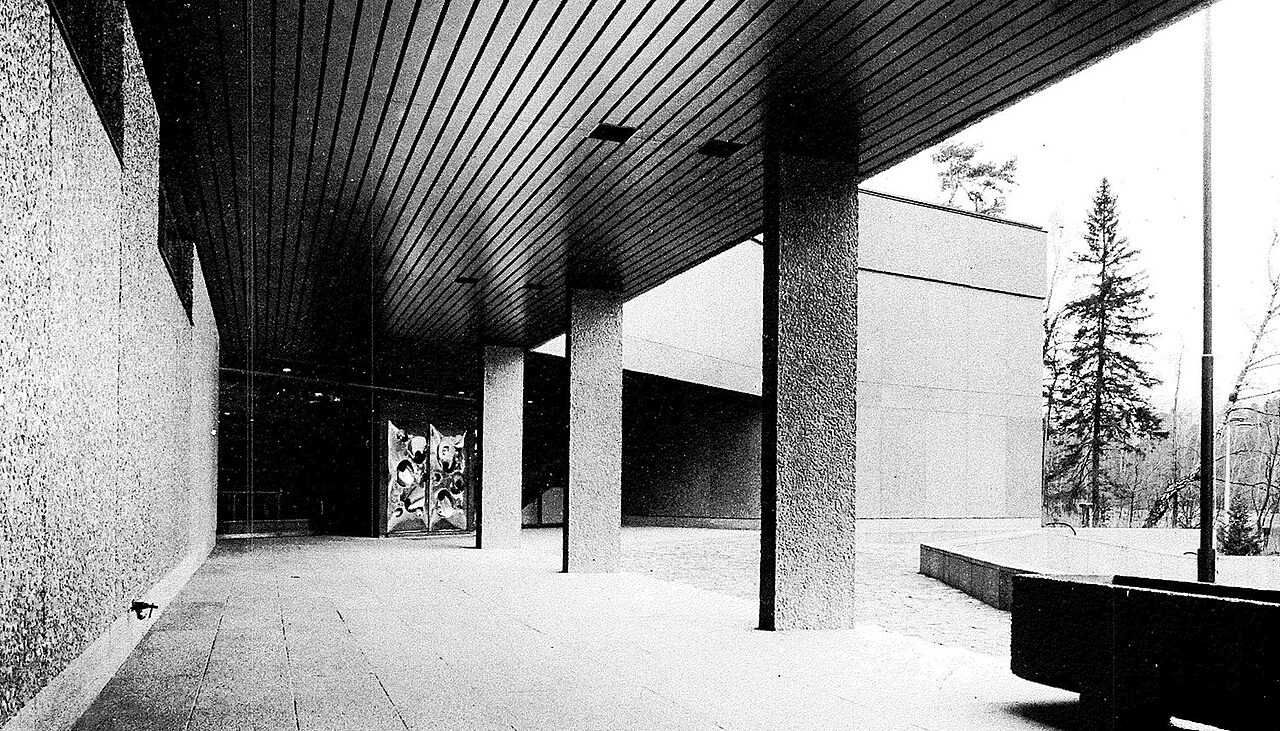
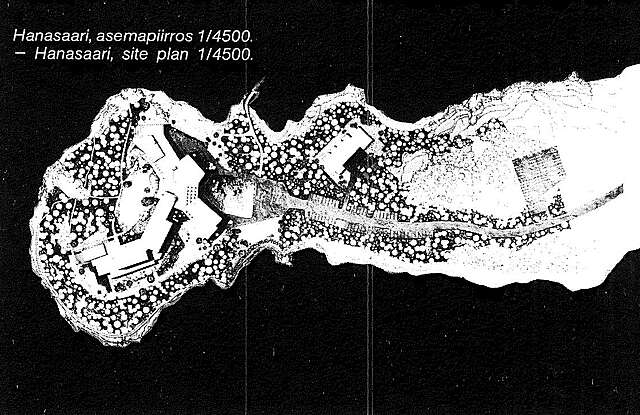
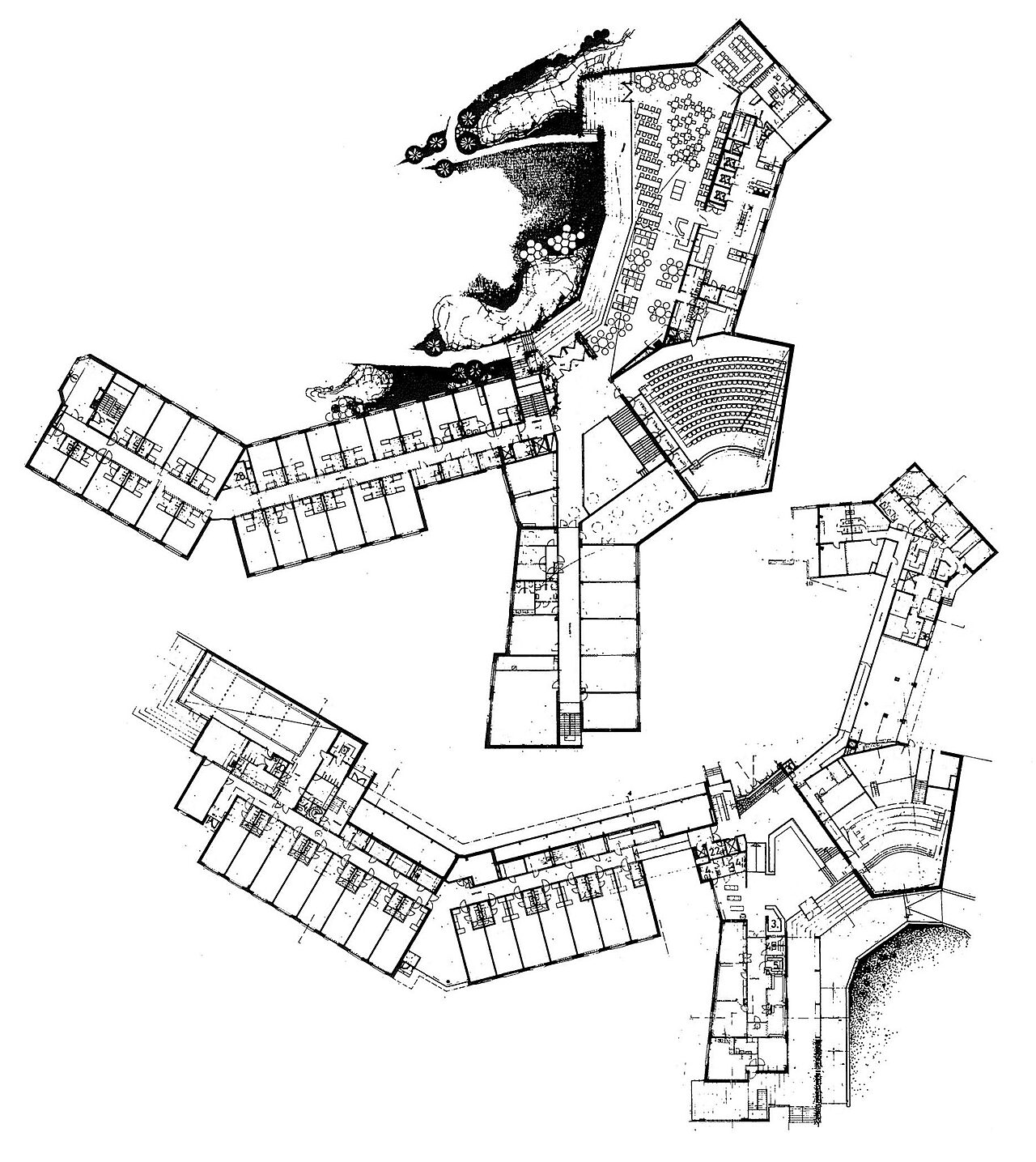
Opened in 1975, the Hanasaari Cultural Centre in Espoo was designed to follow the island’s natural terrain and shoreline, with ramps easing level changes and a landscape plan that preserves the surrounding nature.

The planning of the Swedish-Finnish Cultural Centre in Hanasaari, Espoo began in spring 1970 and the construction in January 1973. The Cultural Centre, designed by architect Veikko Malmio, was opened in April 1975.
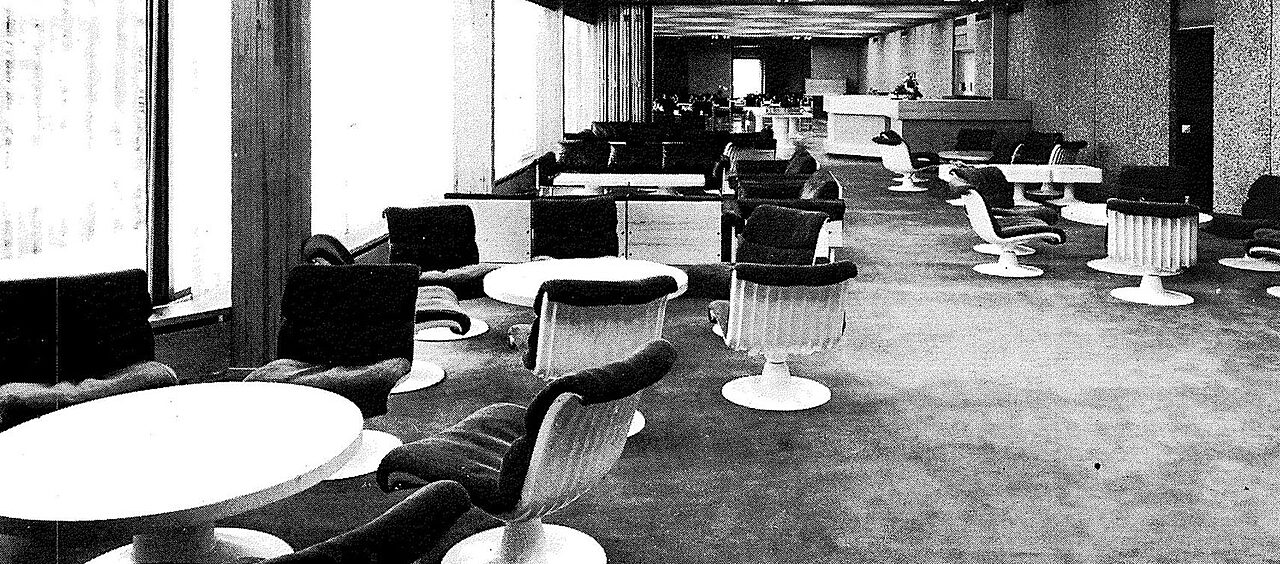
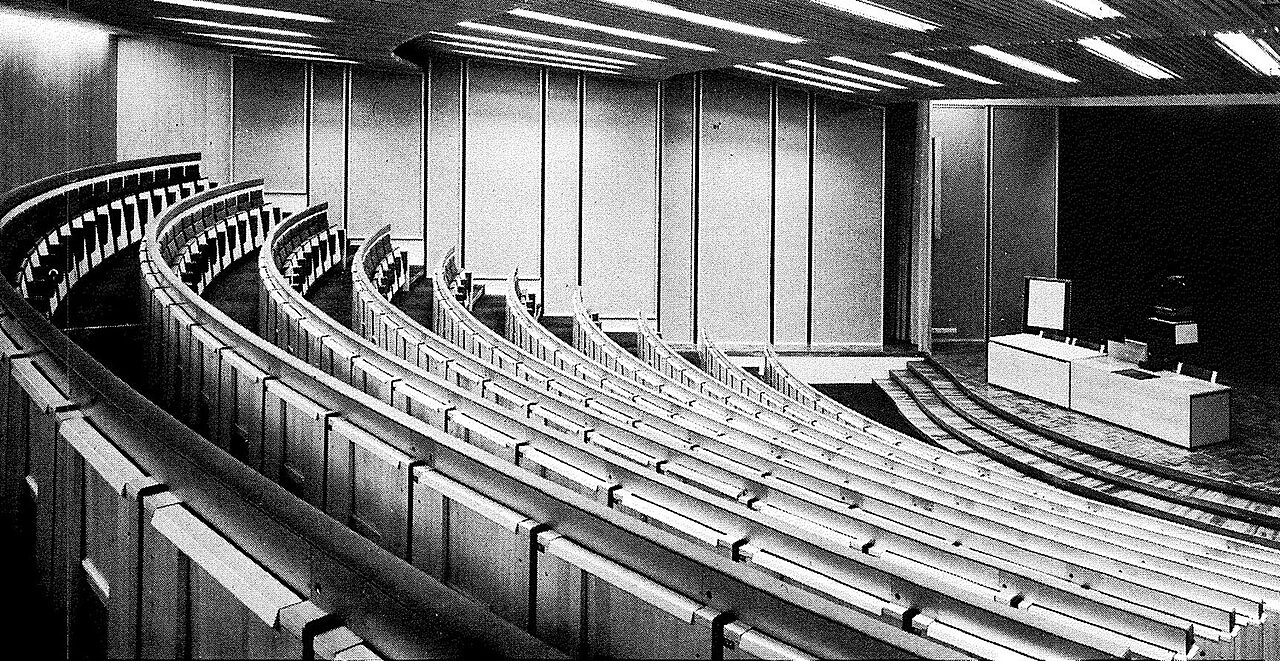
The basic planning principle was to create a structure which follows the terrain and takes into account the topography, flora and marine climate. Groups of facilities with different functions are places in the three curved wings, providing the best possible conditions for facing direction and view, according to their particular purpose. The traffic centre of the course building is a two-storey foyer with an entrance to the lecture room and the three wings of the building: the accommodation wing, the restaurant wing and the teaching wing. The differences in level on the ground floor are compensated for by sloping corridor ramps to facilitate the movement of the disabled.
The landscape plan made for Hanasaari preserved the parts of the area not built on in their natural state, as a park for public use. The whole shoreline was kept in its natural state, which was unusual at the time.
Source: Finnish Architectural Review 1/1976
Gallery




Location
Hanasaarenranta, Espoo
Get directions


